Fall Invaders in Georgia: How to Stop Stink Bugs, Kudzu Bugs & Lady Beetles from Moving In
You step onto the porch and notice bugs gathering around the windows, on the siding or beside the back door. A few have already made themselves comfortable inside. Fall company is one thing. These guests were not on the invitation list.
Brown marmorated stink bugs, kudzu bugs and multicolored Asian lady beetles seek protected winter shelter around Georgia homes. They may gather outside before slipping through small openings into a building.
Start outside: Identify the insect, repair entry points and remove indoor stragglers without crushing them. Repeated indoor spraying is not the best answer for these seasonal visitors.
Why Are Bugs Gathering on My House in October?
These insects are looking for places to spend the winter, a behavior called overwintering. UGA Extension identifies fall as the home-invasion season for all three pests and specifically notes October and November movement by kudzu bugs.
Sunny walls, window trim and sheltered gaps can become gathering places. Asian lady beetles are especially noticeable on sun-exposed building surfaces. Their attraction to a building is not evidence of a dirty kitchen.
References: UGA neighborhood pest guide and University of Kentucky lady beetle guidance.
Three Fall Invaders to Recognize
1. Brown Marmorated Stink Bug
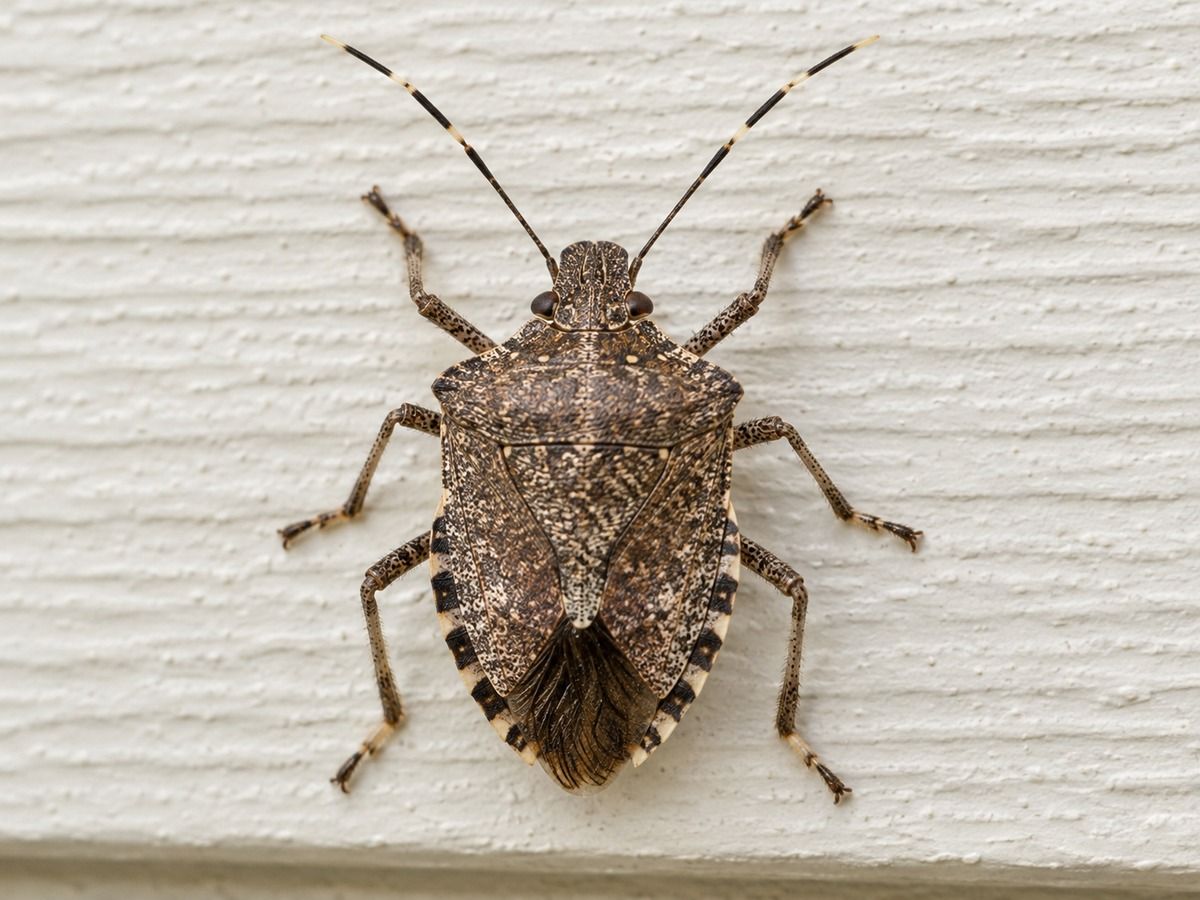
Halyomorpha halys is a mottled brown, shield-shaped insect about half to two-thirds of an inch long. Pale bands on the antennae and alternating light and dark markings along the abdomen's outer edge are useful clues. Not every brown stink bug is this species.
Adults shelter in tight, dry spaces, including gaps around doors and windows. A bug emerging indoors on a warm winter day may have entered months earlier.
Reference: UGA brown marmorated stink bug identification and behavior.
2. Kudzu Bug
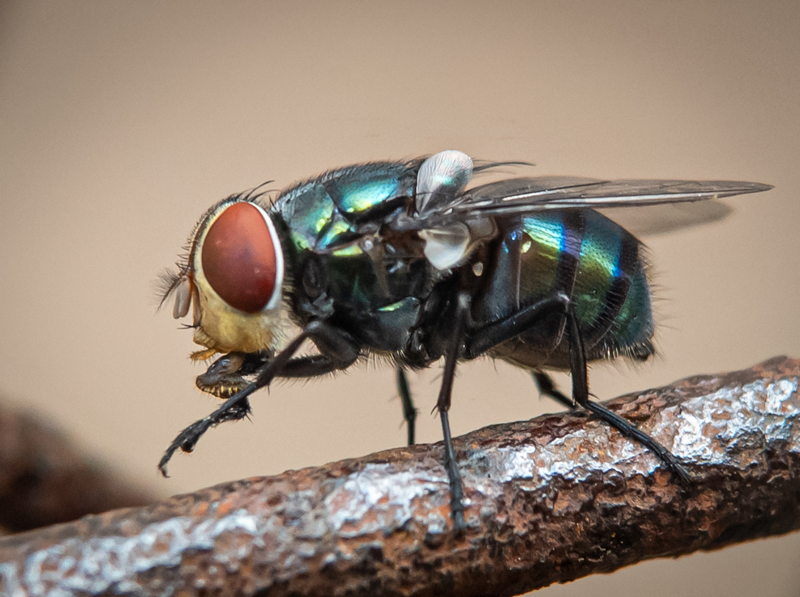
Megacopta cribraria is much smaller: roughly one-sixth to one-quarter inch long. Look for a compact, rounded-square body with olive-brown coloring and dark speckling, rather than the larger stink bug's pointed shield shape.
Kudzu bugs often collect on light-colored siding and trim. Homes near kudzu or soybean fields may see more activity, although the insects can fly in from elsewhere. Avoid crushing them, which can cause odor and staining.
Reference: NC State Extension kudzu bug guide.
3. Multicolored Asian Lady Beetle
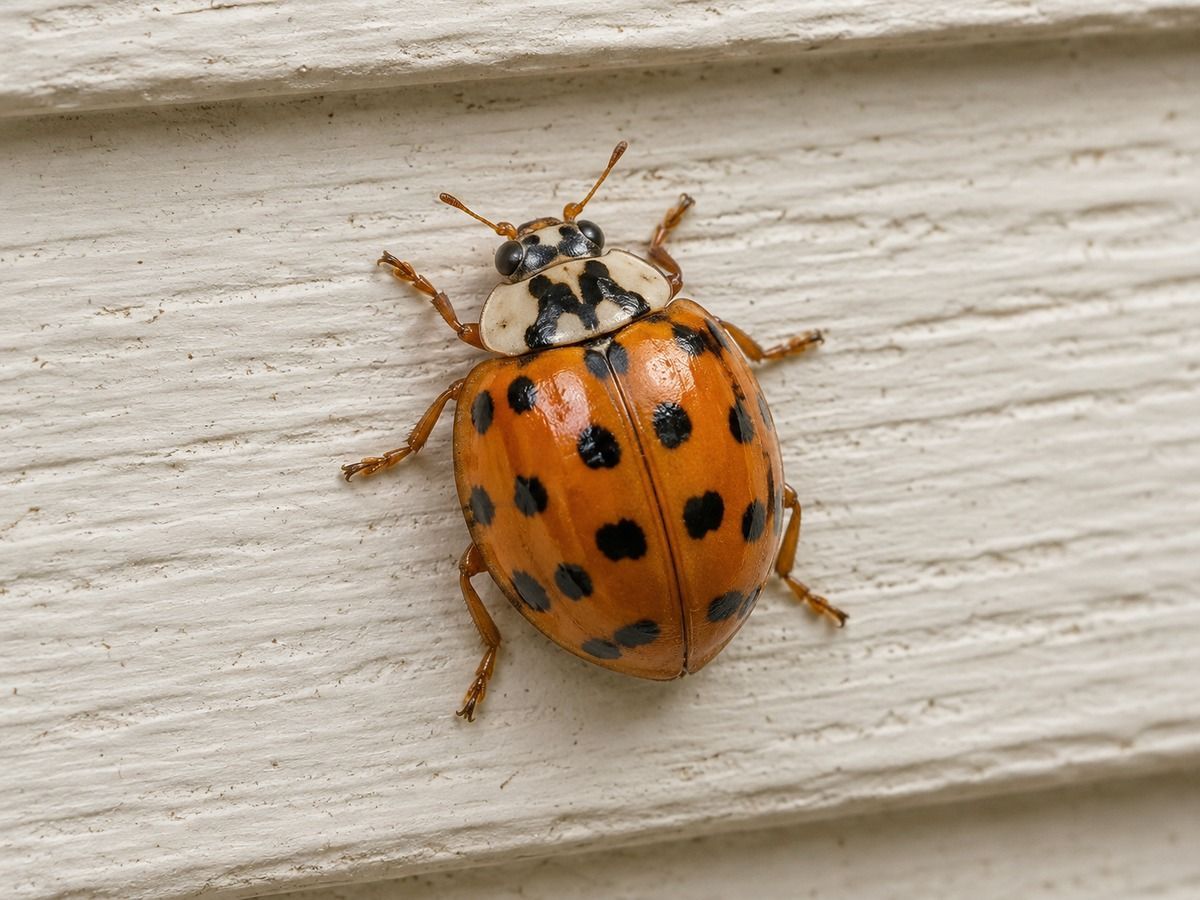
Harmonia axyridis is a rounded, domed lady beetle with variable coloring and spot patterns. Common forms are orange, yellow or red. A dark M-shaped marking on the pale area behind the head is a useful clue; the marking can be broken or thickened.
These are lady beetles, not a completely separate group from "ladybugs." They eat aphids and other plant pests outdoors but become a nuisance when they cluster around homes. A few spots or an orange color alone do not establish the species.
Reference: University of Minnesota identification guidance.
Compare the body shapes and markings in the gallery below. A clear photo of the insect on your home can help confirm identification.
How to Keep Fall Invaders Outside
Start with the building's exterior. Small gaps around doors, windows and utility penetrations can admit insects. Repairing those openings addresses the route indoors, rather than just the bugs you happen to see.
Doors and windows
Replace worn weather stripping and door sweeps. Repair torn screens and check that windows close properly. Daylight around a closed exterior door is a reason to inspect its seal.
Exterior gaps
Check around plumbing, cables, trim and foundation openings. Use an appropriate repair material for unintended gaps. Do not block designed drainage or ventilation openings.
Sheltered access
Check crawlspace access doors, garage seals and accessible exterior joints. Have damaged or difficult-to-reach building components evaluated rather than improvising a repair from a ladder.
Reference: EPA guidance on keeping stink bugs out.
Already seeing bugs? You can still close unintentional entry points and reduce additional arrivals. Repairs will not instantly remove insects already sheltered in a wall or attic.
What to Do When the Bugs Are Already Inside
Use a vacuum to collect accessible insects instead of crushing them against walls, curtains or upholstery. Empty the canister or remove the bag promptly, seal the contents in a disposal bag and place it in an outdoor trash container. Vacuuming does not necessarily kill the insects, and odors may remain in the vacuum.
Pay attention to where insects reappear. A recurring group at one window or ceiling corner is useful information for an inspection, but it does not prove that spot is their original exterior entrance.
References: EPA stink bug guidance and University of Minnesota lady beetle removal guidance.
Skip the indoor spray routine. UGA does not recommend indoor insecticide treatments for these overwintering stink bugs and lady beetles. Killing hidden insects also leaves bodies that can attract scavenging pests such as carpet beetles.
Reference: UGA guidance on stink bugs inside homes and the UGA neighborhood pest guide.
When Can Professional Treatment Help?
When large numbers repeatedly collect near entrances, a pest professional can identify the insect and assess whether a targeted exterior treatment is appropriate. Treatment works best as part of a plan that also addresses entry points; it is not a substitute for sealing the house.
Kudzu bugs can keep arriving from nearby vegetation, so one application may not solve the problem. Ask which areas a service covers, whether follow-up is needed and which repairs are the homeowner's responsibility.
References: NC State on the limits of kudzu bug treatments and University of Kentucky on exterior lady beetle treatments.
For any pesticide, follow the complete label and use it only at approved sites. Never use an outdoor-only product indoors or apply more than directed. Keep children and pets away as required by the label.
Reference: EPA pesticide-use precautions.
Frequently Asked Questions
Are these bugs reproducing inside my house?
Brown marmorated stink bugs and Asian lady beetles do not reproduce indoors. Seeing them later in winter or spring can mean insects that entered in fall are becoming active, not that a new generation hatched in your rooms.
Are Asian lady beetles beneficial or a pest?
Both descriptions can apply. They help by eating plant pests outdoors, but large indoor gatherings are a nuisance. They may also release a yellowish, odorous fluid that stains surfaces.
Will removing nearby kudzu solve the problem?
It may reduce a nearby food source, but kudzu bugs are mobile and use other host plants. Removing one patch does not guarantee they will stop reaching your house.
Can I wait until winter to seal the gaps?
It is better to repair entry points before more insects enter. Waiting until cold weather arrives gives them additional opportunities to settle into sheltered spaces.
Further reading: EPA, University of Kentucky and NC State Extension.
Keep Fall Company on the Porch
Seeing bugs gather around your doors, windows or siding? Contact Pest Magic to discuss the activity and the next steps for your home.
We serve Macon, Forsyth, Warner Robins, Griffin, Milledgeville and surrounding Georgia communities.